

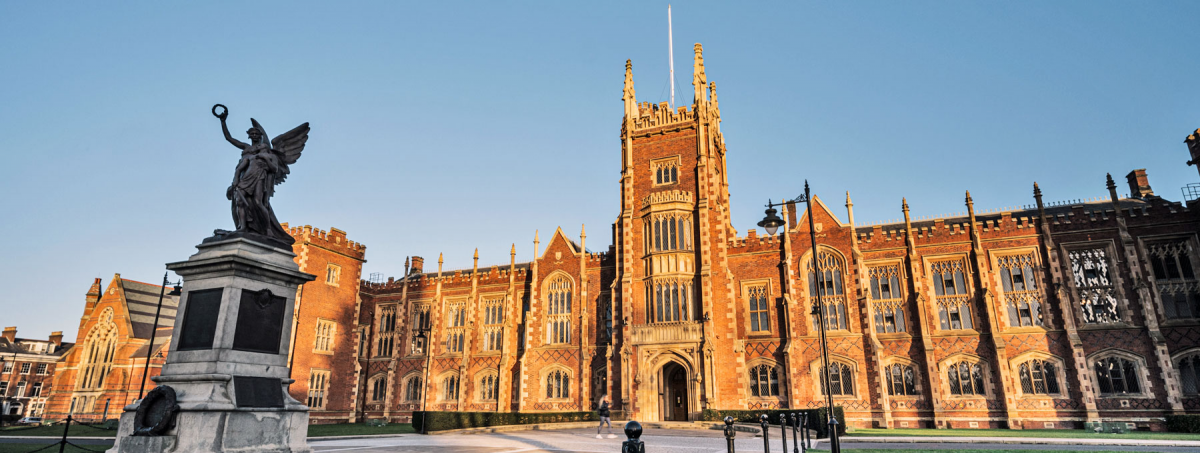
Rolls-Royce and Queen's University Belfast have signed a University Technology Partnership, formalising more than 25 years of joint work on engine modelling, design simulation and cyber security. The deal gives Rolls-Royce a dedicated academic anchor in Northern Ireland and commits both organisations to expanding graduate training for the aerospace sector.
Details of the agreement, carried by Science Business, confirm the UTP builds on work through Queen's School of Mechanical and Aerospace Engineering and its Centre for Secure Information Technologies, which has already shaped Rolls-Royce's engine design and cyber security capability over two decades.
Rolls-Royce Holdings plc, headquartered in Derby, England, and listed on the London Stock Exchange (LSE: RR.), designs and manufactures engines for civil aerospace, defence and power generation customers. The group's 2025 full-year results reported revenue of £20.1 billion (approximately €23.5 billion) and underlying operating profit of £3.5 billion (approximately €4.1 billion). Queen's University Belfast, a Russell Group member based in Belfast, posted record research income of £124.6 million (approximately €146 million) in its latest annual report.
The structural driver behind the UTP is the Advanced Manufacturing Innovation Centre, established through the Belfast Region City Deal, which Queen's says now lets research move from laboratory to industry application more quickly than under the previous informal collaboration.
Trevor Robinson, UTP director at Queen's, said the formal structure would let the two organisations continue "creating faster design capabilities, advancing modelling and simulation, and cyber security" while building an aerospace talent pipeline for Northern Ireland students.
Mark Jefferies, head of research partnerships at Rolls-Royce, said the Queen's agreement is the company's "new anchor" among its university partnerships across the UK's four nations, adding that a strong pipeline of local talent is needed to sustain products that "last for decades."
For the sector, the partnership confirms that Northern Ireland's aerospace research base is shifting from informal academic collaboration toward formalised, long-term industrial partnership structures designed to secure both technology development and workforce supply.
Source: sciencebusiness.net / qub.ac.uk / rolls-royce.com







.png)